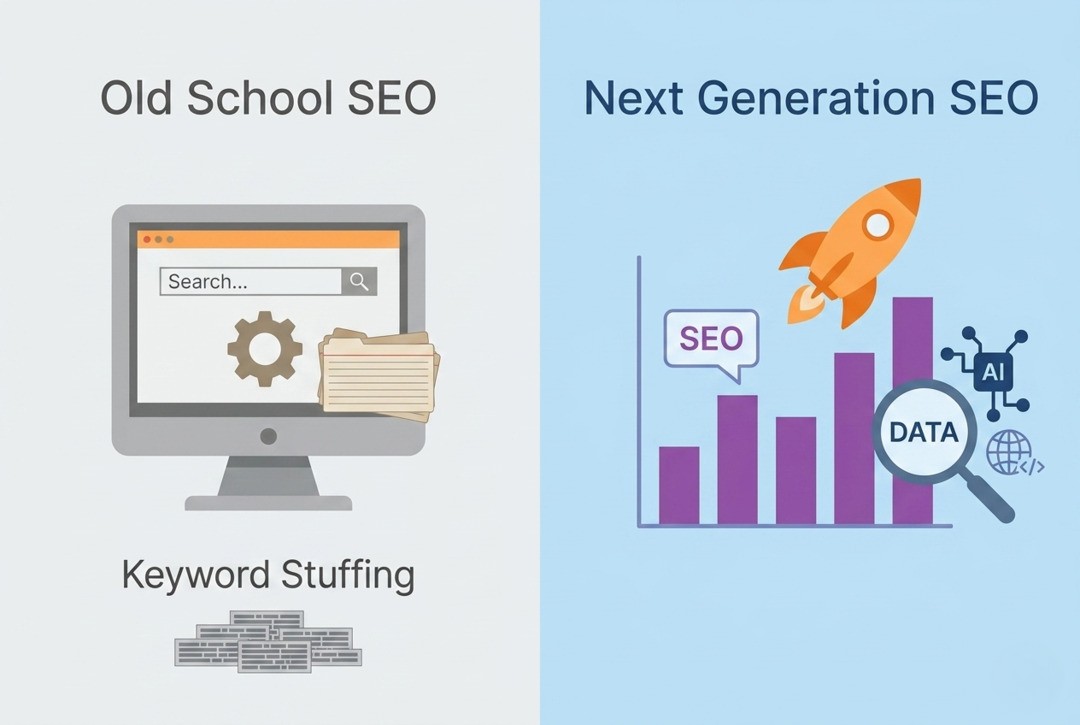
In the UK’s competitive digital market, your website is not just a brochure it is your primary sales engine. With Google operating on mobile-first indexing and AI-driven ranking systems, businesses that fail to prioritise mobile performance are losing visibility, traffic, and conversions.
If you want to dominate UK search results, you need more than just a good design. You need strategic, technically sound web development services that integrate SEO from the ground up. This guide explains exactly how to build a mobile-first, SEO-optimised website that ranks and converts.
Why Mobile-First Is No Longer Optional in the UK
Google officially shifted to mobile-first indexing years ago, meaning it primarily evaluates the mobile version of your website for ranking purposes. In the UK, where mobile browsing dominates user behaviour, this shift has real consequences.
If your mobile experience is slow, cluttered, or difficult to navigate:
- Your bounce rate increases
- Your Core Web Vitals suffer
- Your rankings drop
Professional web development services ensure your site architecture, design, and performance are engineered for mobile users first not retrofitted later.
1: Start with a Mobile-First Design Framework
Mobile-first design means designing for smaller screens before scaling up to desktop. This forces clarity, simplicity, and performance efficiency.
Key Principles:
- Responsive grid systems
- Touch-friendly navigation
- Minimalistic layouts
- Compressed media files
Developers should prioritise lightweight frameworks and eliminate unnecessary scripts. Effective web development services focus on performance budgets from the planning stage not after launch.
2: Optimise Core Web Vitals
Google’s Core Web Vitals remain a critical ranking factor in UK search results.
The Three Metrics That Matter:
- Largest Contentful Paint (LCP) – loading speed
- First Input Delay (FID) – interactivity
- Cumulative Layout Shift (CLS) – visual stability
To optimise these:
- Use next-gen image formats (WebP)
- Implement lazy loading
- Minify CSS and JavaScript
- Use reliable UK-based hosting
Technical optimisation is where professional web development services deliver measurable SEO impact.
3: Build a Clean, Crawlable Site Architecture
Search engines prioritise clarity. Your website structure must make it easy for bots to crawl and index content efficiently.
Best Practices:
- Logical URL hierarchy
- SEO-friendly slugs
- XML sitemap submission
- Proper internal linking
For example:
/web-development-services/
/seo-services/
/digital-marketing-uk/
Structured architecture strengthens topical authority and helps dominate UK SERPs.
4: Integrate SEO During Development (Not After)
One of the biggest mistakes businesses make is treating SEO as a separate phase. In reality, SEO must be embedded into development.
On-Page Foundations:
- Optimised title tags and meta descriptions
- Header hierarchy (H1–H3 structure)
- Schema markup implementation
- Alt-text for accessibility
High-quality web development services align developers and SEO strategists from day one to prevent costly revisions later.
5: Optimise for UK Search Intent
Ranking in the UK requires localisation and intent mapping.
How to Target UK Audiences:
- Use UK-specific spelling (optimised, behaviour, etc.)
- Create location-based landing pages
- Optimise for “near me” and city-based keywords
- Claim and optimise Google Business Profile
A mobile-first website combined with local optimisation increases visibility across regional search results.
6: Implement Technical SEO Essentials
Technical SEO remains the backbone of sustainable rankings.
Must-Have Technical Elements:
- HTTPS security certificate
- Canonical tags
- Structured data (Schema)
- Proper redirect management
- Mobile-friendly testing compliance
Professional web development services ensure these technical elements are embedded correctly, preventing ranking issues and crawl errors.
7: Prioritise Speed & Hosting Infrastructure
Website speed directly affects both rankings and user experience.
Speed Optimisation Strategies:
- Content Delivery Network (CDN)
- Server-side caching
- Lightweight codebase
- Database optimisation
In competitive UK markets, even a one-second delay can reduce conversions significantly. Fast-loading sites dominate both search and sales.
8: Optimise for AI & Generative Search
Search engines now use AI to interpret content contextually. To rank in 2026 and beyond, your website must demonstrate topical authority.
AI-Ready Optimisation:
- Publish comprehensive service pages
- Use semantic keyword clusters
- Answer common UK queries clearly
- Include FAQ sections
For businesses offering web development services, this means showcasing expertise, case studies, and detailed process breakdowns.
9: Conversion-Focused UX Design
Ranking is only half the battle. Your website must convert traffic into enquiries.
Conversion Elements:
- Clear call-to-action buttons
- Trust signals (reviews, testimonials)
- Case studies
- Simple enquiry forms
Mobile-first UX reduces friction and increases engagement, especially among UK users browsing on smartphones.
10: Continuous Monitoring & Improvement
SEO is not a one-time setup. Continuous optimisation is required to maintain dominance.
Ongoing Optimisation Includes:
- Google Search Console monitoring
- Performance audits
- Content updates
- Technical health checks
Reliable web development services include post-launch support to maintain performance, security, and ranking stability.
Final Thoughts
To dominate UK search results, your website must combine mobile-first design, technical excellence, SEO integration, and conversion strategy. Businesses that treat development and SEO as interconnected disciplines outperform competitors consistently. A high-performing website is not built by accident. It is engineered through strategic planning, performance optimisation, and continuous refinement.