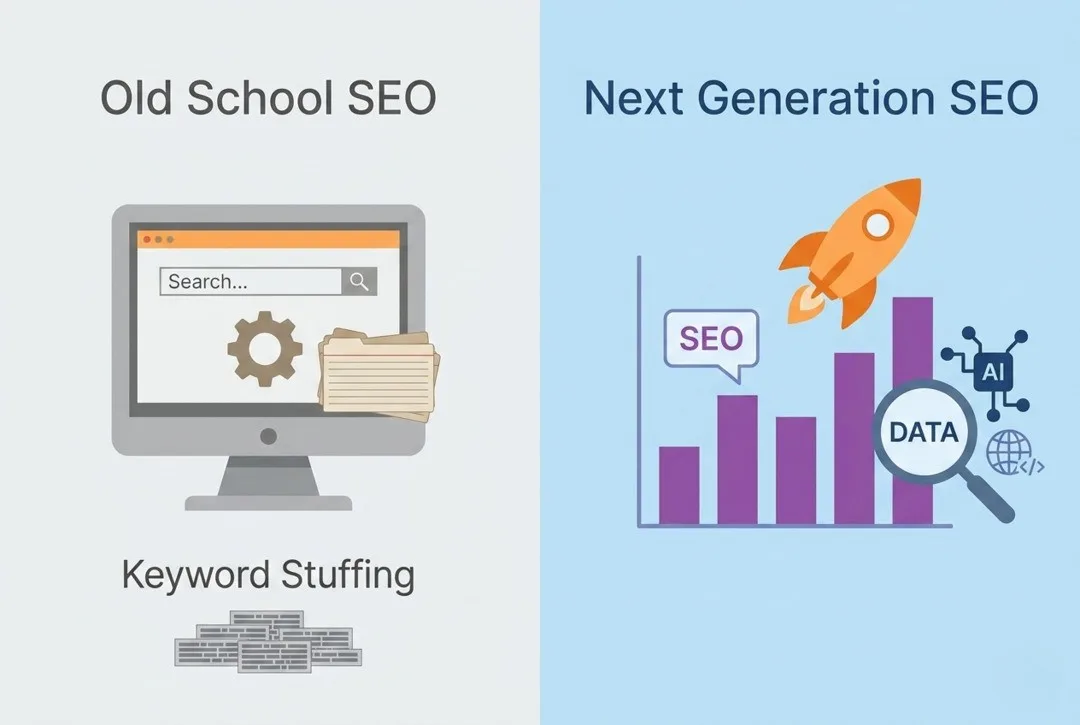
Search behaviour is changing. We aren’t just typing keywords into a box anymore; we are asking questions. Whether it’s speaking to Alexa while cooking or asking Google a quick question on mobile, users want direct answers, not a list of ten blue links. This shift from SEO London has given rise to Answer Engine Optimisation (AEO), a critical evolution for anyone serious about digital visibility.
While traditional search engine optimisation focuses on ranking for keywords, AEO is about being the single best answer. For businesses targeting competitive markets, such as SEO London agencies or local services, understanding AEO is now essential for survival in the modern SERPs (Search Engine Results Pages).
What Is Answer Engine Optimisation (AEO)?
Answer Engine Optimisation (AEO) is the process of optimising content to provide direct, concise answers to user queries. The goal is to be featured in “position zero”, the featured snippet, or to be the primary response read aloud by voice assistants like Siri, Google Assistant, or Alexa.
In the past, search engines were like librarians. You asked for a topic, and they gave you a list of books (websites) to browse. Today, search engines act more like experts. You ask a question, and they give you the specific answer immediately. AEO is the art of structuring your content so that these engines recognise it as the definitive answer.
This doesn’t mean you abandon your current strategy. Instead, you layer AEO on top of your existing efforts. If you are working with an agency specialising in SEO London, they likely already integrate structured data and conversational keywords into their campaigns. AEO takes this a step further by focusing purely on answer delivery.
Why AEO Is Crucial for Modern Marketing
The rise of voice search and mobile usage drives the necessity for AEO. Statistics show that a significant portion of searches on mobile devices are voice-activated. When someone uses voice search, they don’t scroll through pages of results. They get one answer. If your brand isn’t that answer, you remain invisible.
The Shift to Zero-Click Searches
A massive trend in recent years is the “zero-click” search. This occurs when a user’s query is answered directly on the results page without them clicking through to a website. While this might sound detrimental to traffic, securing that featured snippet builds immense brand authority.
For a company offering SEO London services, appearing in a snippet for “best technical SEO practices” establishes instant credibility. Users see the brand name associated with the correct answer, which influences their decision when they eventually do need to hire a service.
Trust and Authority
AI-driven search engines (like Google’s SGE or ChatGPT-integrated search) prioritise credibility. They look for content that is not only relevant but also authoritative. By optimising for answers, you signal to the algorithms that your content is factually accurate and easy to digest. This aligns perfectly with Google’s E-E-A-T (Experience, Expertise, Authoritativeness, and Trustworthiness) guidelines.
How AEO is Different from SEO London
It is easy to confuse AEO with traditional SEO, but their objectives differ slightly.
Traditional SEO is about visibility. You optimise meta tags, build backlinks, and target broad keywords to get your website on the first page. The metric of success is usually traffic and rankings.
AEO is about utility. You optimise for specific questions, use schema markup, and structure content for immediate consumption. The metric of success is being the featured answer or voice response.
Think of it this way: SEO gets you into the library; AEO gets your book opened to the exact page the user needs.
For example, a traditional SEO strategy might target the keyword “plumber London”. An AEO strategy would target queries like “Who offers emergency plumbing in North London at night?” or “How to fix a leaking tap quickly.”
A robust digital strategy, particularly in a competitive hub like London, requires a hybrid approach. Leading SEO London experts often combine these disciplines, using broad SEO to capture research-intent traffic and AEO to capture high-intent, solution-seeking traffic.
Actionable Strategies for Implementing AEO
Dominating the answer engines requires a specific tactical approach. You cannot simply write a blog post and hope for the best. You must structure your data and content meticulously.
1. Target Question-Based Keywords
People speak differently from how they type. A typed search might be “weather London,” but a voice search is likely “What is the weather like in London today?”
To succeed in AEO, use tools like AnswerThePublic or Google’s “People Also Ask” feature to find the exact questions your audience is asking. Look for the “who, what, where, when, why, and how” queries.
Strategy: Create a content calendar that addresses one specific question per piece of content. If you are an SEO London consultancy, write articles answering specific client pain points, such as “How much should I spend on SEO in the UK?” or “Why has my organic traffic dropped?”
2. Structure Content for Snippets
Google loves structure. To increase your chances of winning a featured snippet, format your answers clearly.
- Paragraph Snippets: Provide a direct, 40–60-word answer immediately after the heading (H2).
- List Snippets: Use bullet points or numbered lists for step-by-step instructions or “best of” lists.
- Table Snippets: Use HTML tables to display data like pricing, comparisons, or schedules.
For instance, if you are writing about “top SEO tools,” don’t bury the list in long paragraphs. Create a clear table comparing features and pricing. This makes it easy for the search engine to scrape and display the data.
3. Implement Schema Markup
Schema markup is code that you put on your website to help search engines return more informative results for users. It is the language search engines speak. By using the FAQ schema, How-to schema, or Article schema, you explicitly tell the engine what your content is about.
This is a technical aspect often handled by SEO London specialists, but it is vital for AEO. If you have an FAQ section on your page, wrapping it in FAQ schema can help those questions and answers appear directly in the search results, increasing your screen real estate.
4. Improve Page Speed and Mobile Experience
Voice search is predominantly mobile. If your site is slow, search engines will not rely on it for quick answers. Core Web Vitals are a ranking factor for traditional SEO, but for AEO, they are a gatekeeper. Your site must load instantly to be considered a viable source for a voice assistant.
Ensure your design is responsive and that text is legible without zooming. The user experience on mobile should be frictionless.
5. Cultivate Brand Authority
Answer engines favour trusted sources. This brings us back to E-E-A-T. Ensure your content is written or reviewed by experts. Include author bios that highlight credentials. If you are discussing SEO London, the author should ideally be a recognised digital marketer with a track record in the UK market.
Build citations and links from other authoritative sites. When multiple trusted sources reference your brand or content, search engines become more confident in serving your content as the definitive answer.
The Future of Search: A Hybrid Landscape
As artificial intelligence continues to integrate into search, evident in developments like Google’s Search Generative Experience (SGE), the line between search engine and answer engine will blur further.
Users will expect a dialogue with their search engine. They will ask follow-up questions. AEO prepares your content for this conversational future. It forces you to create content that is not just keyword-rich but genuinely helpful and logically structured.
Businesses that ignore this shift risk becoming irrelevant. While traditional ranking signals still matter, the “winner takes all” nature of voice search and featured snippets means that being second best often results in zero visibility.
Whether you manage your marketing in-house or partner with an SEO London agency, reviewing your content strategy through the lens of AEO is imperative.
Does AEO replace traditional SEO?
No, AEO does not replace traditional SEO; it complements it. You still need technical SEO, backlinks, and keyword research to build authority and get indexed. AEO is a layer of optimisation applied to high-quality content to make it more accessible to voice assistants and snippet algorithms.
How do I find questions for AEO content?
You can find questions by using tools like AnswerThePublic, Semrush, or Ahrefs. Additionally, simply typing your primary keywords into Google and looking at the “People Also Ask” section provides a goldmine of real user queries. For a term like SEO London, you might find questions about local agency costs or specific UK regulations.
Is Schema markup necessary for AEO?
While you can theoretically rank for a featured snippet without Schema markup, using it significantly increases your chances. Schema code (like FAQPage or HowTo) removes ambiguity, helping search engines understand exactly which part of your text is the question and which is the answer.
Can small businesses compete in AEO?
Absolutely. In fact, AEO is a great equaliser. Because AEO relies on specific, long-tail questions, a small business with deep expertise can often outrank a large corporation that provides generic answers. Local businesses can specifically dominate local queries (e.g., “best SEO London agency for startups”) by providing highly specific, locally relevant answers.
Will AEO result in less website traffic?
It is a valid concern that “zero-click” searches might reduce clicks. However, being the featured answer builds massive brand awareness and trust. Furthermore, for complex queries, users often read the snippet and then click through to the website for the full context. The traffic you do get from AEO tends to be higher quality and further down the conversion funnel.
Final Words
Answer Engine Optimisation (AEO) represents a pivotal shift in the digital marketing and SEO London landscape. It is reshaping how brands connect with users in a world driven by voice search and instant answers. By focusing on delivering clear, authoritative, and structured responses to specific questions, businesses can secure the sought-after featured snippets and position themselves as leaders in their fields.
Key strategies like targeting conversational, question-based keywords, integrating schema markup, and consistently demonstrating expertise are essential for success. Combining traditional SEO tactics with AEO allows for broader visibility and the chance to capture high-intent, solution-focused traffic.
For those operating in competitive markets, mastering AEO is no longer optional. It is a core strategy to ensure visibility, establish authority, and meet the evolving needs of modern searchers. Those who adapt their content for answer engines now will be best placed to dominate SERPs and connect meaningfully with their audiences.Are you looking for a professional SEO London agency for your business? Just connect with us to boost your online presence.