Picture a customer messaging your website at eleven o'clock at night. They want to reschedule a delivery, check whether their warranty still applies, and get an estimate for a refund, all in the same conversation. A traditional chatbot would manage one of those requests, badly, then hand the rest to a member of staff the next morning. Increasingly, on UK business websites, that hand-off never happens. Software reads the request, checks the order system, updates the delivery slot, works out the refund, and confirms everything back to the customer before anyone else has switched their laptop on.
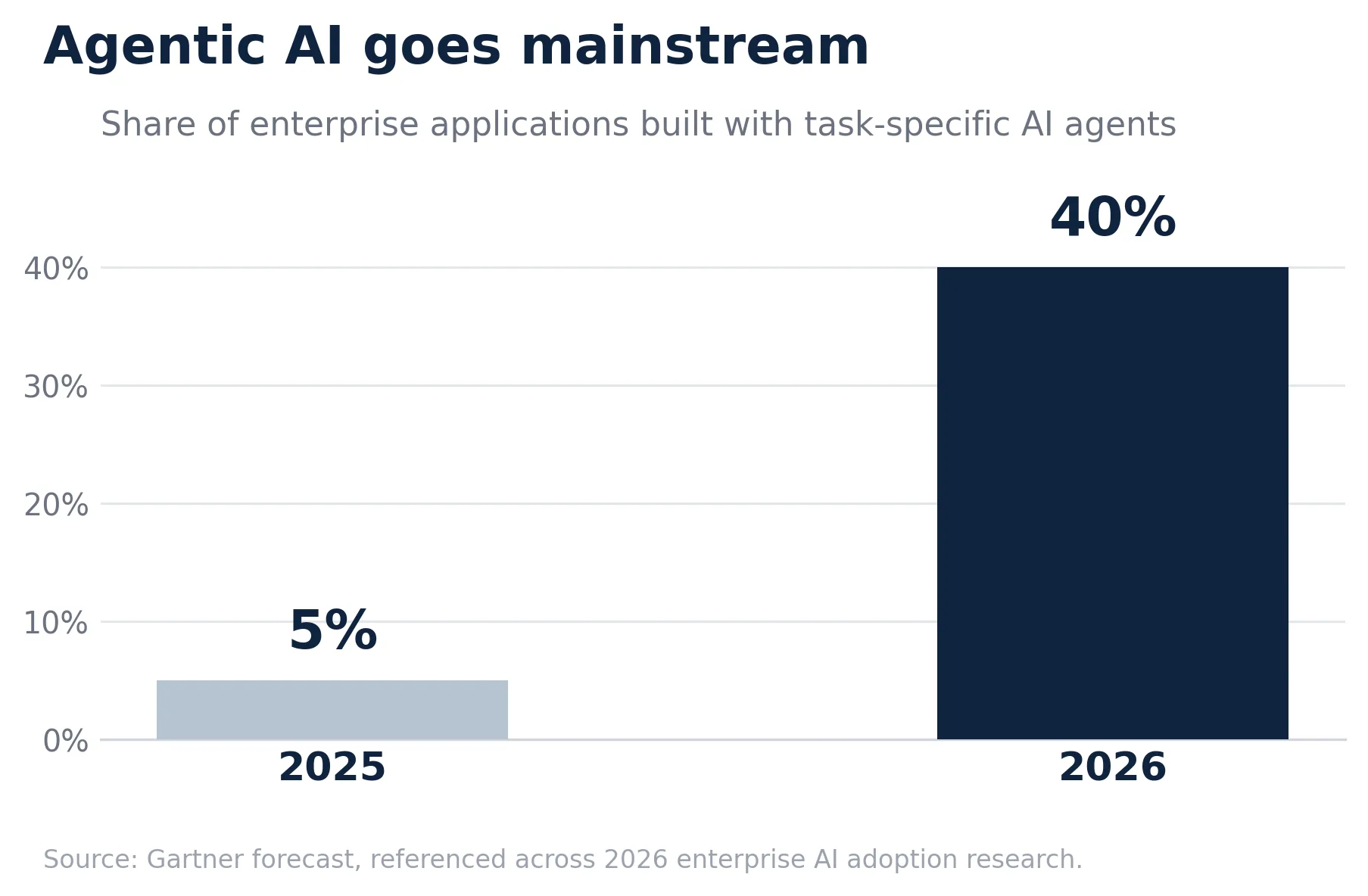
That is agentic AI, and it is why the phrase has taken over the sales decks, LinkedIn posts, and client calls of nearly every software development agency this year. Not because it is a fresh buzzword (the industry has no shortage of those), but because it marks a genuine change in what business software can be trusted to do without someone watching over it.
This article sets out what agentic AI actually means, why 2026 is the year it moved out of research papers and into everyday business systems, and what it takes for a software development agency to turn the idea into something your business can actually rely on.
What Is Agentic AI?
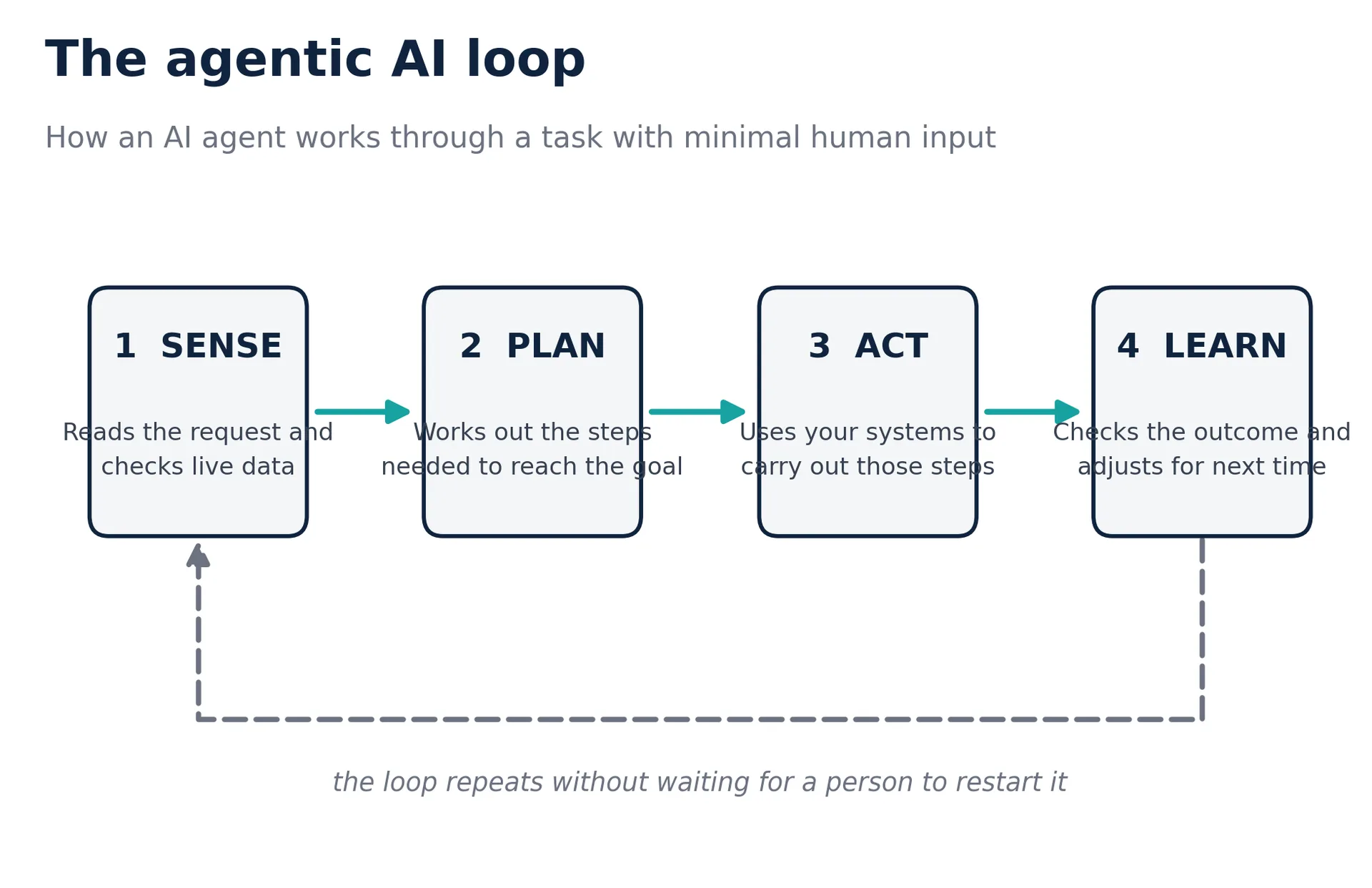
Agentic AI describes software that can work towards a goal across several steps, decide what to do next on its own, use other tools or systems along the way, and change its plan when circumstances shift, largely without a person directing each move.
That is a meaningfully different job to the one most business chatbots do. A typical AI chatbot answers a question or drafts a reply when someone asks it to, then it stops and waits for the next prompt. It has no memory of what needs to happen next and no way to act outside that single conversation.
An agentic system behaves more like a competent new team member than a search box. Give it a goal, say, "get this invoice paid" or "onboard this new starter", and it will break that goal into steps: check the accounting system, send the right email, wait for a reply, chase politely if nothing happens, and only bring in a human once it hits something it genuinely cannot resolve alone.
Reactive Automation, Chatbots and Agentic AI Compared
The easiest way to see the difference is side by side.
Feature | Rule-Based Automation | AI Chatbot (Generative AI) | Agentic AI |
|---|---|---|---|
What triggers it | An exact command or keyword | A question or prompt from a person | A goal, then it works independently |
Decision-making | None, it follows a fixed script | Limited to the current conversation | Plans several steps and adapts as it goes |
Memory | None | Usually only within a single chat | Keeps context across a whole task, often across sessions |
Use of other systems | Pre-programmed integrations only | Rare, usually text-only replies | Can query, update, and act across several business systems |
Typical example | A "reply with tracking number" bot | A website FAQ assistant | An agent that reschedules a delivery, updates records and confirms with the customer |